Smoke & Heat in Fairbanks, Alaska

It’s been an interesting summer so far in interior Alaska.  First we had snow and low temperatures until mid-May, and then we had about 3 weeks of 80 and 90 degree weather.  When you live somewhere that is cold and dry for 8 or 9 months of the year any heat you can get is like charging some inner battery.  So let’s just say we have adequately charged our batteries…life was great…until the smoke rolled in!  Right now we have well over a hundred fires burning throughout Alaska, some small and some large, some being fought near towns and some being left alone to burn.
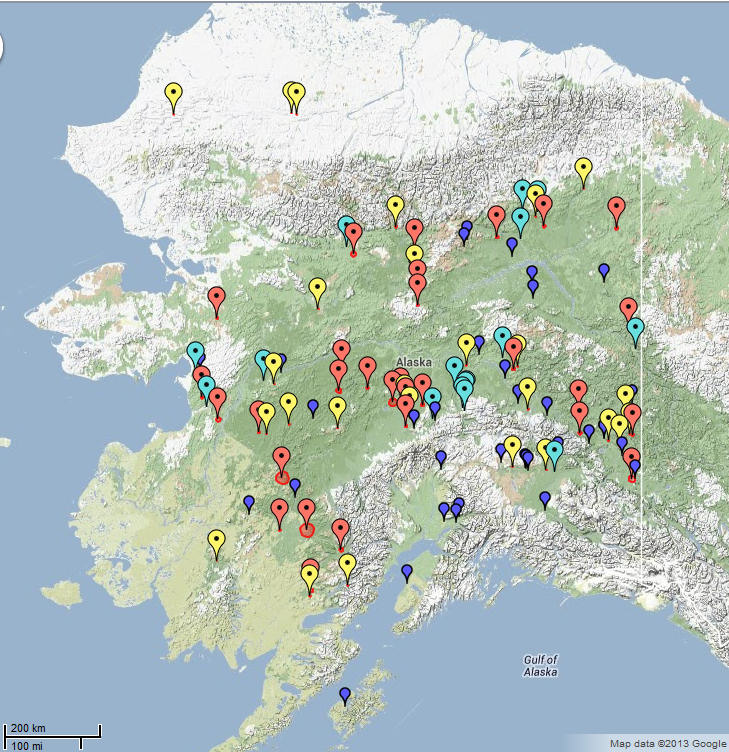
Forest Fires in Alaska - July 1, 2013The University of Alaska has a sensational website showing where fires are burning in Alaska. Here is a screen shot from it taken July 1st.  The website, UAFSMOKE: Wildfire Smoke Prediction for Alaska, is in it’s experimental phase but when finished should be able to tell us when smoke is going to reach a given area around Fairbanks.  This is when Jack and I shut all our windows and turn on the air filters, so we’d love to know ahead of time.  (Sometimes though, like the other day, its 80 degrees out and our house is baking with us trapped inside.)

One of the fires that is plaguing us is Skinny’s Road fire, the yellow dot that is close to the upper right of the word Alaska on the map.  It’s about 20 miles away from us and on the other side of the Parks Highway.  But any of the ones in that general area could be causing the our smoke problems right now.  The crazy thing is, you can go to bed with a heavy smokey haze outside and wake up to a bright clear day because wind patterns are changing so much.  So Jack and I are constantly sniffing the air to decide when to close or open the windows.

The smoke affects certain people more than others and Jack is not greatly affected.  He even went out and chainsawed some logs last weekend with the mosquitoes and haze surrounding him.  A day off is a day off and you have to get something done.  But I have to stay inside because I feel a heaviness in my chest when the smoke gets bad, and if I breathe it in too long my sinuses and allergies act up too.  People with asthma and respiratory problems like COPD are in big trouble if they don’t get into a safer environment.  Just about everyone gets a headache if out in it for too long.

All in all, here at our house Jack and I have had only about 48 hours of dense dangerous smoke, so we are beyond thankful for that, considering how many are burning around us as you can see from the map.  Below is a photo from June 21st, 2010, late in the evening under the midnight sun during Solstice, looking southward down from a turnout on the Parks Highway onto the Tanana Valley where a fire smolders (on the left in the photo) and sends its wispy smoke westward (to the right). Click it for a larger image.

Forest fire in the Tanana Valley

Best wishes for a safe and enjoyable Fourth of July!

_________________________
How does Jack stay warm? Part 2

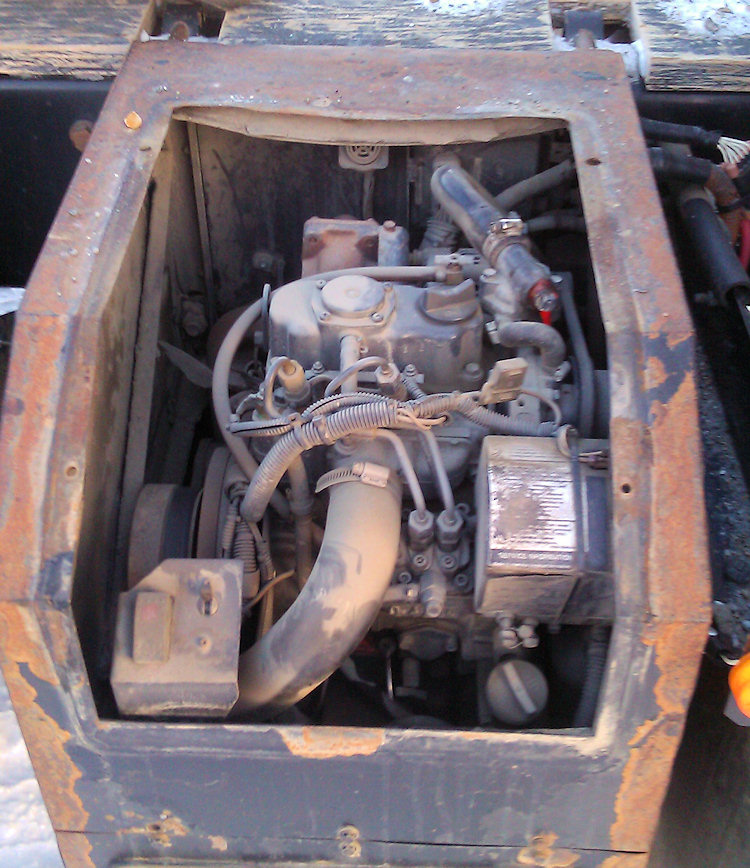
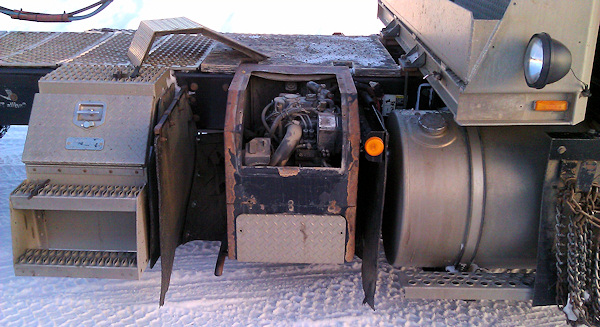
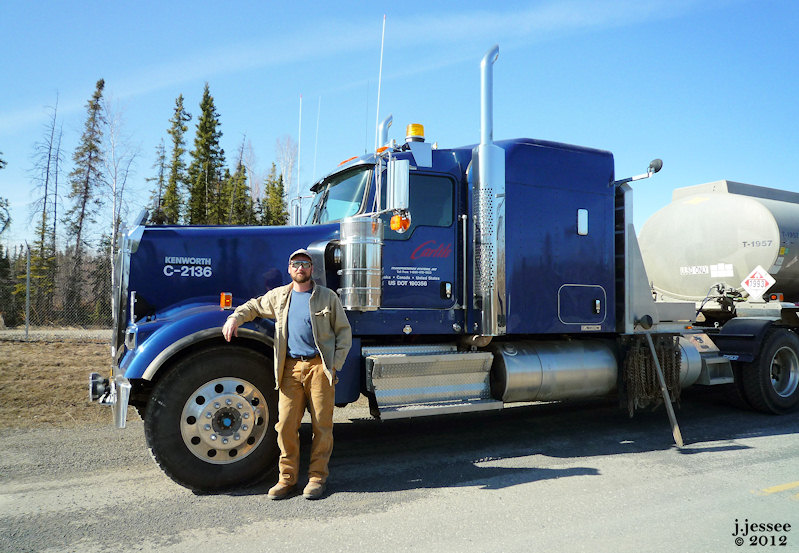
Another way Jack stays warm has to do with the generator in his truck that enables him to turn off the truck’s engine in the winter and not worry about the cab freezing or the engine not starting again.  In fact, this generator is supposed to run at all times that the truck isn’t and keep the cab at room temperature or close to it.  Unfortunately, reality is not quite that ideal.  The generator sometimes breaks down and at those times Jack is forced to run the truck all night at any temperature below about 40 or 50 degrees (since even though Jack has an inner furnace, even he has a hard time sleeping when it’s below 50 degrees).Generator in Big RIg

When I first learned that trucking companies run big trucks all the time during the winter, or at least used to before they got generators to keep the cab warm even when the truck was not running, I was shocked at the amount of fuel that must be needed on a daily basis throughout the winter.  This is unfortunate, and it’s impressive that Carlile is one of the first trucking companies in Alaska to start using the generators in order to cut down on fuel use.

This 4KW generator runs on diesel which it draws from the truck’s fuel tank.  It powers an electric heater under the bed in the cab and a fan blows heated air into the cab from there.  On top of that, the generator serves another purpose:  to circulate antifreeze through the truck’s engine in cold temperatures, preventing it from getting too cold to start.  It’s a great deal and all big rigs driven up here should have them to cut down on fuel usage.

Generator in a Big Rig

Generator in a Big Rig

How does Jack stay warm out there? Part 1

You know how some people just have an inner furnace that keeps them warm all the time?  That’s Jack.  At 40 or 50 below he’ll bundle up with Carhartt bibs, and a hat, or maybe a face mask.  But 20 below, that’s just normal to him.

A reader, John Webb, asked “I was just wondering when Jack is out on the Dalton swapping cogs how does he keep warm at night sleeping in his truck and why does’nt he ever wear a serious coat/jacket/parka, I feel cold just watching him get out when he’s hitchin up to his next load.”

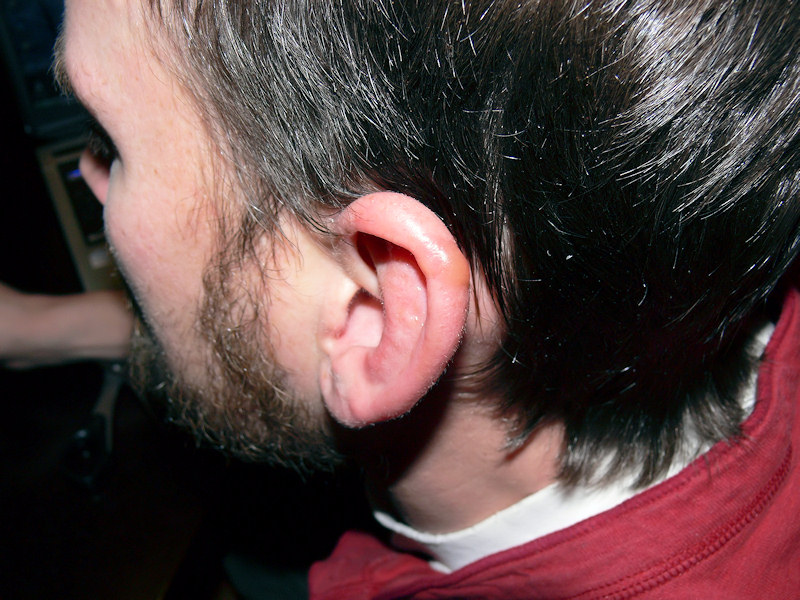
Jack's Frostbit EarJack might have an inner furnace, but even he can misgauge temperatures when wind is a factor.  A few years ago at 20 above, Jack frostbit his ear.  This was a serious miscalculation on his part, and it shows what even a minor breeze can result in when it’s still above zero.  (You can see the blister on the outer part but if you notice, almost half of the ear is red and swollen.)

So this is serious stuff to miscalculate on and Jack paid the price this time.

He does wear a serious jacket at those colder temperatures but oftentimes if it’s just a quick jump outside to check the load before leaving, his long-sleeved shirt (over a T-shirt) is enough.  You balance the hassle of getting out your coat, which could be buried in the back under your cooler or lunch or logbook, with how much cold you can handle on your short trip out into it.

As for how he stays warm at night in the truck, stay tuned!

__________________________________________

Huge Wolf Track!

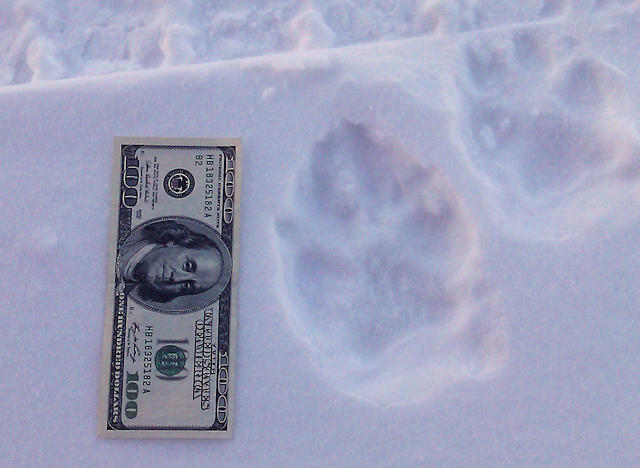
Wolf Track compared to the size of a dollar bill

Jack found this wolf track along the Dalton Highway the other day and put down a bill to compare size.  It’s huge!

(When I looked at this I said “You used a 100 dollar bill???”  Turns out, it was the most crisp bill in his wallet so he used it!  Funny.)

The wolf track is much larger than I would have imagined.  Our dog is pretty decent sized but his print would be about half that size!

______________________________________

Comments, links, & a question about Season 5

Jack really appreciates all the great comments from you guys!  Someone mentioned that we should post a link to Jack’s Facebook page, so click here to visit his personal page.

There is a fan page out there too run by a fan of Jack’s – click here for that.   (This fan page may be shut down eventually since the page’s goal was to bring Jack Jessee back to Ice Road Truckers for Season 6 and that definitely happened.)

Someone else asked why Jack wasn’t on Season 5.  And the answer is that Jack was burnt out with being filmed every second while he was driving, and the producing company just couldn’t pay him enough to continue at that time.  Turns out, a year later enough time had gone by and Jack was open to doing the show again.  Life sometimes takes a turn that you don’t expect, and being on national TV was definitely one of them for Jack!

So, now you have a little background info.  Have a great week!

Not Canada-Bound At This Time

Hello Everyone – It looks like Jack is not going to be on the next season of Ice Road Truckers.  Who knows what the future holds, but for now it doesn’t look like he is involved in filming in Canada for next season  .  We’ll keep posting though, so stay tuned!

Jack Jessee

Here is Jack a few weeks ago packing down snow so I can get out of our driveway the next morning.  It was really coming down!

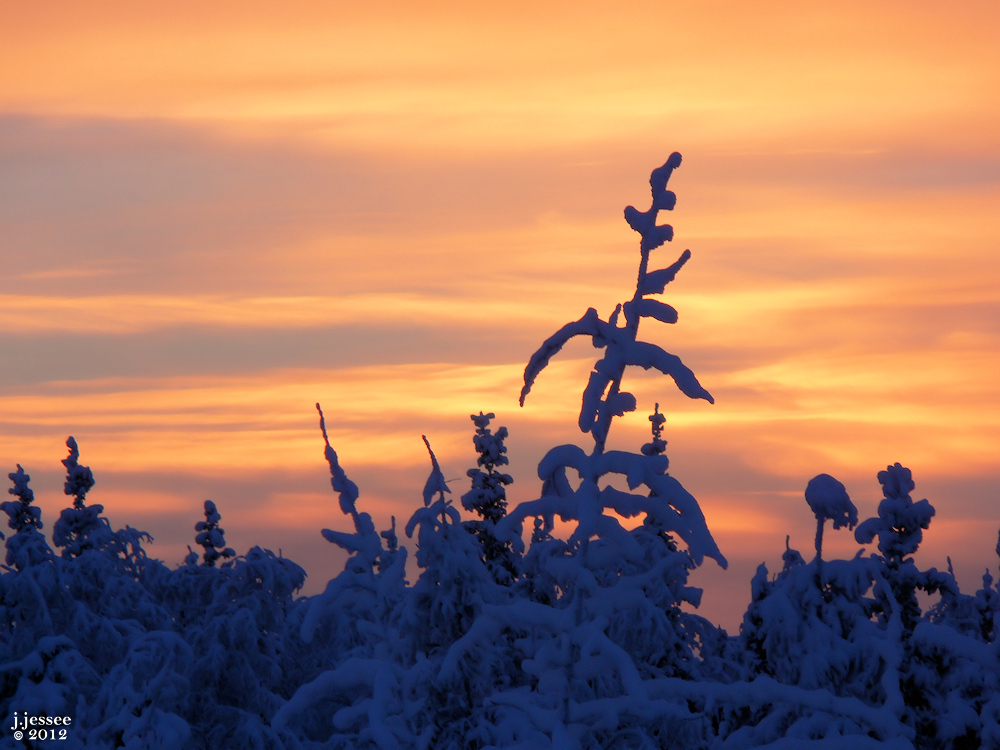
(Just so you know, one of the pleasures of living in Alaska is seeing the landscape after a heavy snow…beautiful!)  Snow on the Trees in the Sunset


Happy New Year from Jack & Judy!

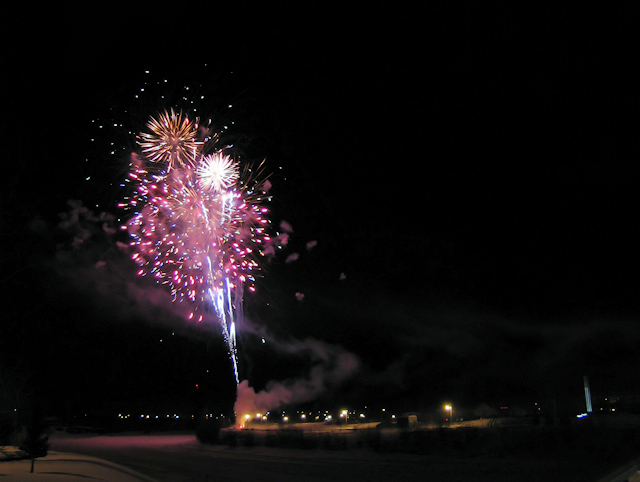
We love New Years here in Alaska because you can actually see the fireworks!  (As opposed to the 4th of July.  Plenty of people celebrate the 4th of July with fireworks but it’s not the same with the midnight sun lurking along the horizon.)

Fireworks in winter

Winter fireworks

Winter Fireworks

Best wishes for the New Year!

________________________________________________
________________________________________________

More Dalton Highway Wildfire Photos

Truck Driving through Wildfire Smoke - Dalton Highway, Alaska 2004

In the last post I described the terrible forest fires of 2004.

Here are more photos that Jack took that year.  Don’t forget you have to click on them to see them at their proper size.

Scary!

Smoke on the Dalton HighwayFire spreading across the tundra

Fire on the Dalton Highway

Forest Fire in the Distance

Hope everyone had a wonderful Christmas!

_____________________

_______________

_______

__

Trucking Through Fires 2004

I just wanted to share with you this amazing photo Jack took in 2004 when wildfires were raging on the Dalton Highway.  Trucks were still moving through but the air quality for drivers was terrible.  Smoke combined with dusty dry conditions.  This was a non-digital photo that I scanned and ran some enhancing on, to a surprisingly interesting effect.

The Alaska West truck has just driven out of heavy smoke and has a substantial dust trail (click photo to enlarge to proper size).  Windy dry conditions exacerbated the fire intensity and level of destruction.

Truck Driving through Wildfire Smoke - Dalton Highway, Alaska 2004

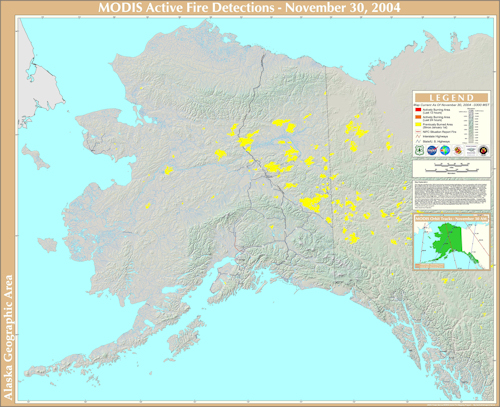
Wikipedia says about the 2004 Alaska fire season:

The 2004 Alaska fire season was the worst on record in terms of area burned by wildfires in the U.S. state of Alaska.[1] Though fewer individual fires formed than in 1989 when almost 1,000 were recorded, more than 6,600,000 acres (27,000 km2) were burned by the approximately 700 fires that ignited. The largest of these fires was the Taylor Complex Fire, which encompassed 1,700,000 acres (6,900 km2) and was the largest fire in the United States from 1997 to 2007.[2] The Boundary Fire, Wolf Creek Fire, Chatanika Fire, and a fire that enveloped the Trans-Alaska Pipeline also received notable attention from firefighting services and the media. All together 426 fires were started by humans and 215 were started by lightning.

Map from Wikipedia:

Map of Alaska Wildfires 2004

You can see how at least one fire burned right over the Dalton.  Even Jack thinks it was a little scary to drive through these fires.  You really can’t see the road but for a few feet… he says the drivers call it “driving by Braille”.  🙂

Thanks for reading!  More wildfire photos to come.

____________________________