How does Jack stay warm out there? Part 1

You know how some people just have an inner furnace that keeps them warm all the time?  That’s Jack.  At 40 or 50 below he’ll bundle up with Carhartt bibs, and a hat, or maybe a face mask.  But 20 below, that’s just normal to him.

A reader, John Webb, asked “I was just wondering when Jack is out on the Dalton swapping cogs how does he keep warm at night sleeping in his truck and why does’nt he ever wear a serious coat/jacket/parka, I feel cold just watching him get out when he’s hitchin up to his next load.”
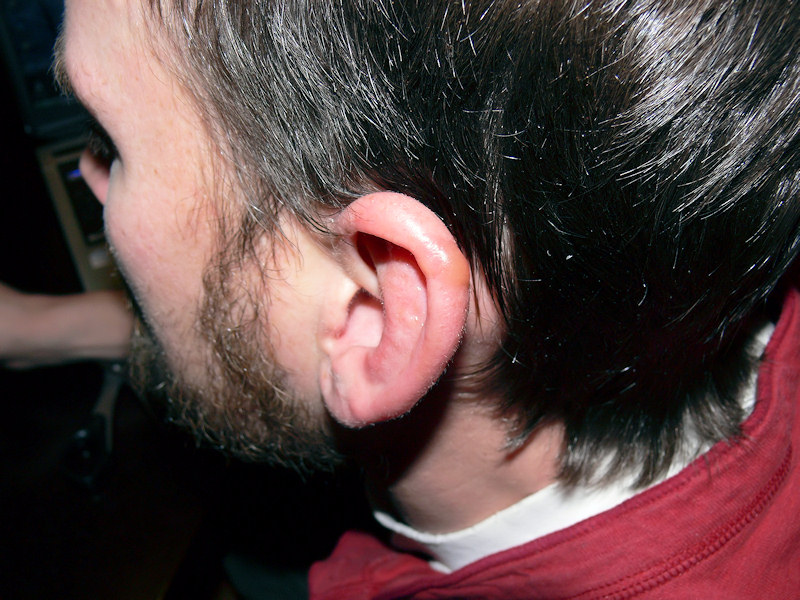
Jack's Frostbit EarJack might have an inner furnace, but even he can misgauge temperatures when wind is a factor.  A few years ago at 20 above, Jack frostbit his ear.  This was a serious miscalculation on his part, and it shows what even a minor breeze can result in when it’s still above zero.  (You can see the blister on the outer part but if you notice, almost half of the ear is red and swollen.)

So this is serious stuff to miscalculate on and Jack paid the price this time.

He does wear a serious jacket at those colder temperatures but oftentimes if it’s just a quick jump outside to check the load before leaving, his long-sleeved shirt (over a T-shirt) is enough.  You balance the hassle of getting out your coat, which could be buried in the back under your cooler or lunch or logbook, with how much cold you can handle on your short trip out into it.

As for how he stays warm at night in the truck, stay tuned!

__________________________________________

More Dalton Highway Wildfire Photos

Truck Driving through Wildfire Smoke - Dalton Highway, Alaska 2004

In the last post I described the terrible forest fires of 2004.

Here are more photos that Jack took that year.  Don’t forget you have to click on them to see them at their proper size.

Scary!

Smoke on the Dalton HighwayFire spreading across the tundra

Fire on the Dalton Highway

Forest Fire in the Distance

Hope everyone had a wonderful Christmas!

_____________________

_______________

_______

__

Trucking Through Fires 2004

I just wanted to share with you this amazing photo Jack took in 2004 when wildfires were raging on the Dalton Highway.  Trucks were still moving through but the air quality for drivers was terrible.  Smoke combined with dusty dry conditions.  This was a non-digital photo that I scanned and ran some enhancing on, to a surprisingly interesting effect.

The Alaska West truck has just driven out of heavy smoke and has a substantial dust trail (click photo to enlarge to proper size).  Windy dry conditions exacerbated the fire intensity and level of destruction.

Truck Driving through Wildfire Smoke - Dalton Highway, Alaska 2004

Wikipedia says about the 2004 Alaska fire season:

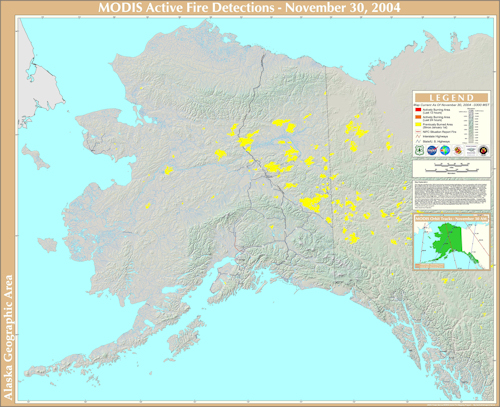
The 2004 Alaska fire season was the worst on record in terms of area burned by wildfires in the U.S. state of Alaska.[1] Though fewer individual fires formed than in 1989 when almost 1,000 were recorded, more than 6,600,000 acres (27,000 km2) were burned by the approximately 700 fires that ignited. The largest of these fires was the Taylor Complex Fire, which encompassed 1,700,000 acres (6,900 km2) and was the largest fire in the United States from 1997 to 2007.[2] The Boundary Fire, Wolf Creek Fire, Chatanika Fire, and a fire that enveloped the Trans-Alaska Pipeline also received notable attention from firefighting services and the media. All together 426 fires were started by humans and 215 were started by lightning.

Map from Wikipedia:

Map of Alaska Wildfires 2004

You can see how at least one fire burned right over the Dalton.  Even Jack thinks it was a little scary to drive through these fires.  You really can’t see the road but for a few feet… he says the drivers call it “driving by Braille”.  🙂

Thanks for reading!  More wildfire photos to come.

____________________________

Truck Shots From The Road

Taking photos from the truck is tough, but possible, as we have discovered.

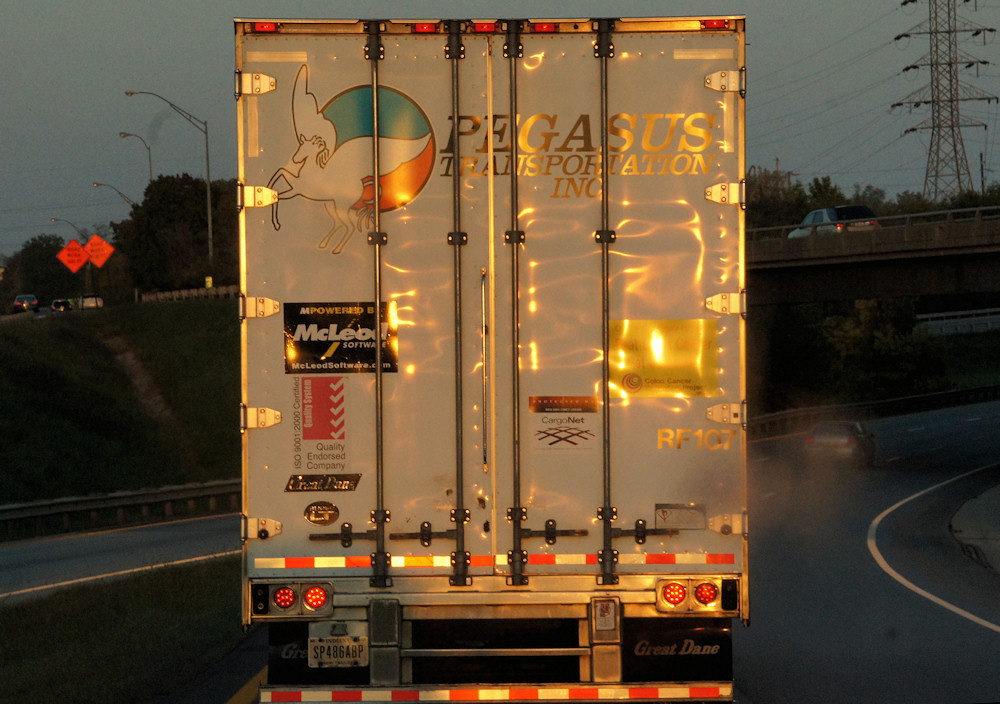
The back of this truck looked quite fabulous reflecting the sunset.

_______________________________

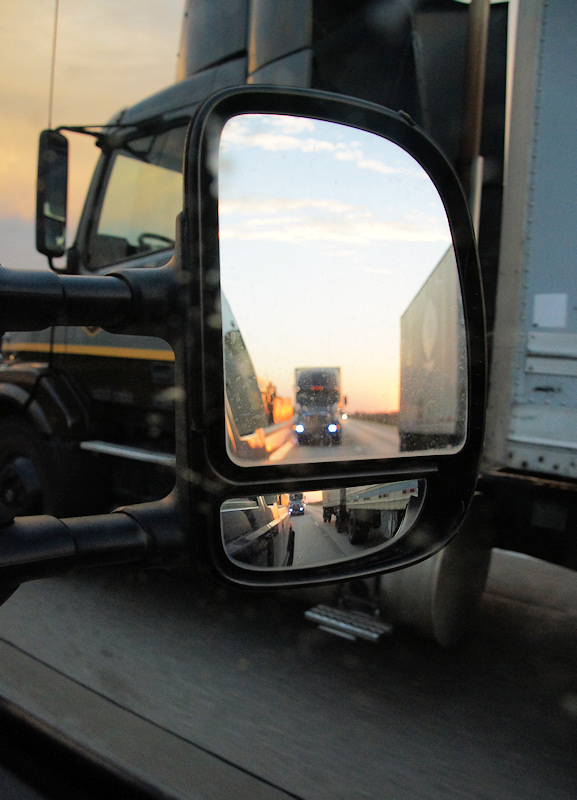
Driving out of the sunset, surrounded by trucks.

___________________________

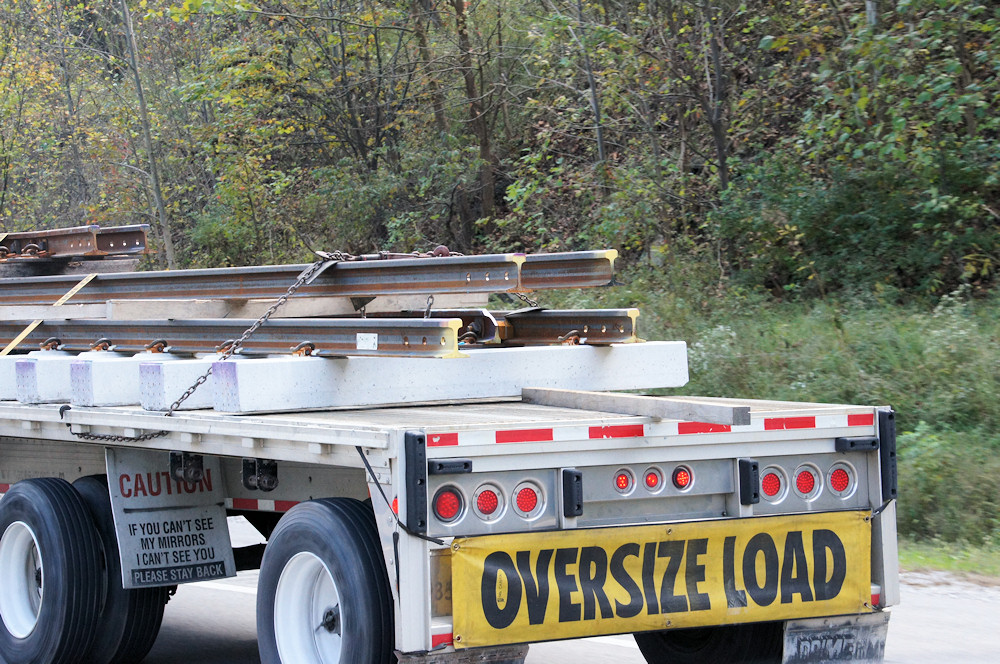
The trucker didn’t know that this piece of wood was near to falling off the rear of his truck.  It must have worked its way out of the load.  Jack tried to tell him on the radio but wasn’t able to find the right channel and soon we were passed him.

______________________________

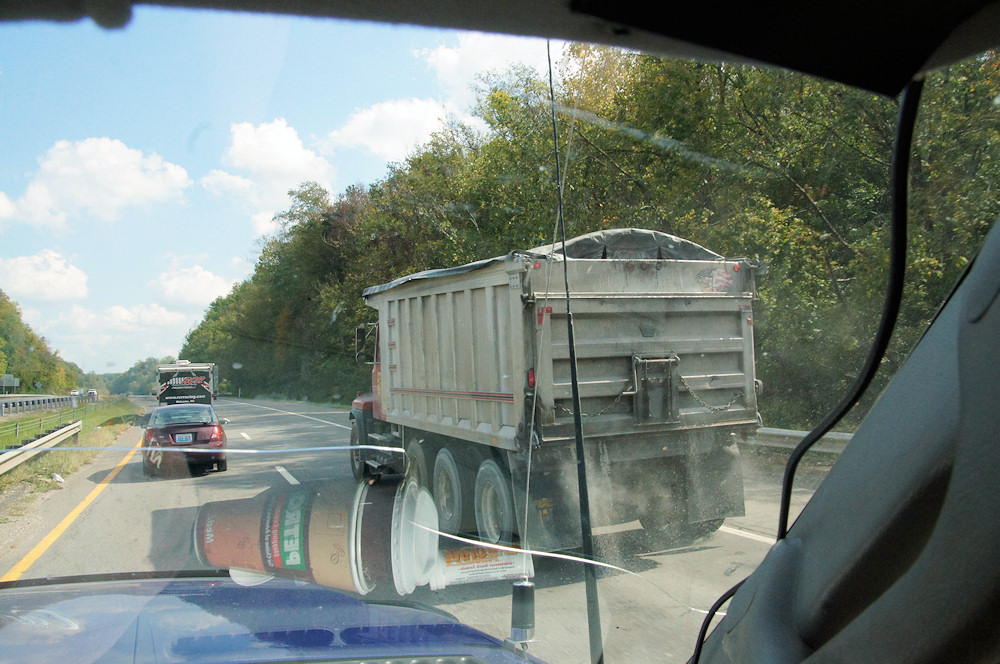
This dump truck was losing it’s load, spraying gravel all over the road.   (The coffee cups look like they are floating but it’s just the reflection of them sitting on the dash.)

_____________________________

Trucks pass under these wildlife corridors in Canada with plenty of room to spare.

____________________________________

And Jack, enjoying the setting sun, driving south.

_________________________________________________

_________________________________

_________________

__

The Shed Saga

Jack is happy to report that he has finished at least one project so far this summer (actually it’s autumn now in Fairbanks).

He fixed the roof on the shed and shingled it.  (I’m telling you, Jack can do anything!)

Here is a photo of him in the middle of the project:

This shed has a bit of a story.

When we first moved into our house, we had to move it since we wanted to build a garage and it was in the way.  Jack tackled the job himself.

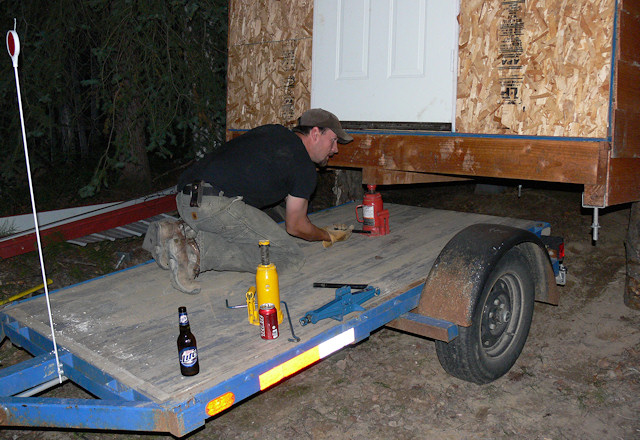
This is him putting the shed on the trailer, getting it ready to be moved:

We realize this is probably the equivalent of drinking while using power tools.  Kids, take note, do NOT drink alcohol while moving a shed!  🙂

The next day, with the shed on the trailer, Jack just barely gives it a little gas to see how sturdy it is.  It was just fine.

This is where it ended up.

(If you want to see a few seconds of this heavy haul project in progress, click here.)

The 4-wheeler is holding it in place.

He had to prop it up on blocks until he could give it a more stable foundation…!!!

Here is the “more stable” foundation when the project was mostly done.

This is not where the shed finally ended up, though he didn’t do the moving this time.  It’s present and permanent spot you can see on the first photo.  We will finish siding it at the same time we side the garage that has yet to be built.

Hope everyone is doing well!  Thanks for reading.  🙂

Dirty Truck!

Hello again, sorry it’s been so long since we’ve posted.  Life has been hectic.  You would think that it would slow down a bit if you aren’t working, but that just means more things need to get done…!

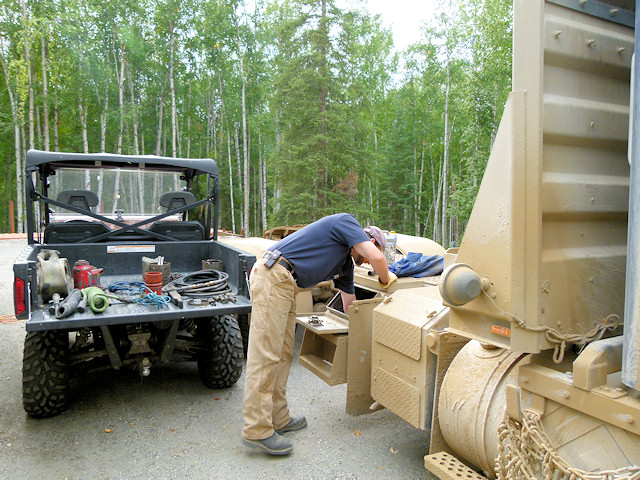
Since Jack is taking some time off (he still works for Carlile) he had to clean out 2019 so it can be used by other drivers while he’s gone.

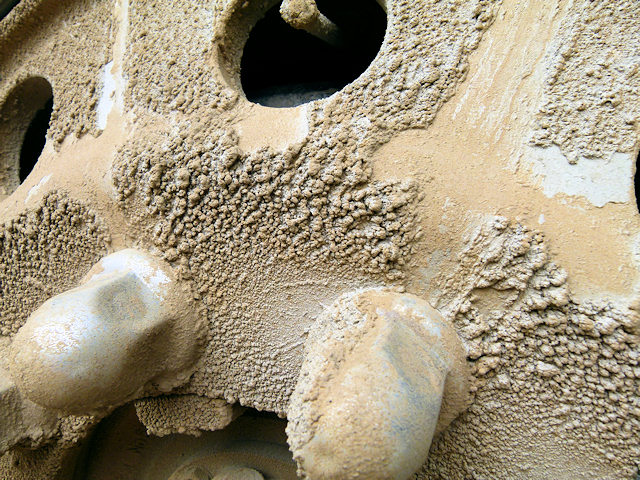
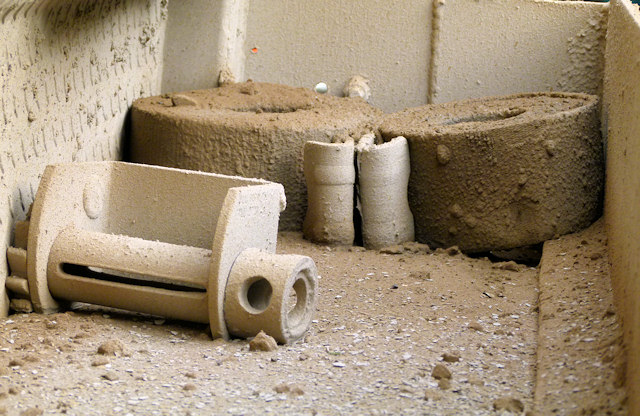
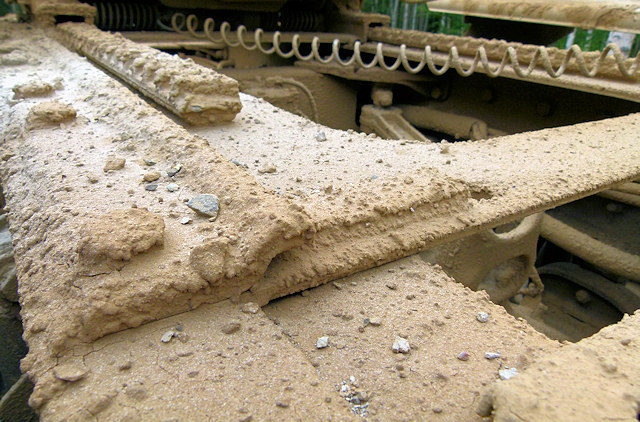
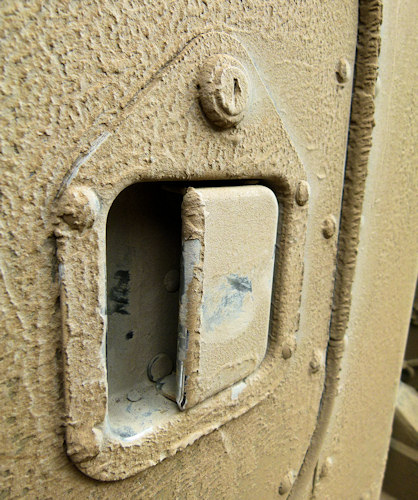
While I was helping him remove his stuff, I noticed that there was a lot of dirt on this truck and I felt the need to document this. 🙂

I hope you enjoy this gallery of dirty truck photos:

Thanks for looking and have a great Labor Day!

___________________________________________________________-

Alaska Aviation Heritage Museum Fundraiser – July 2010

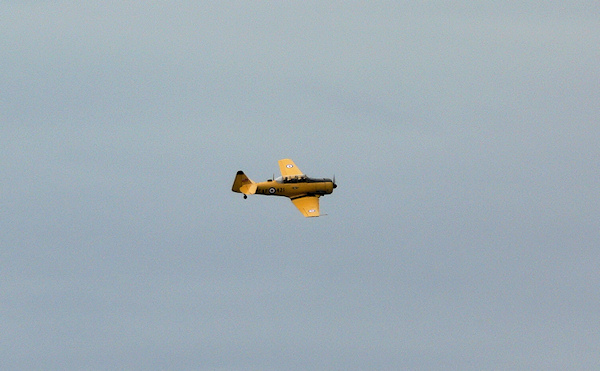
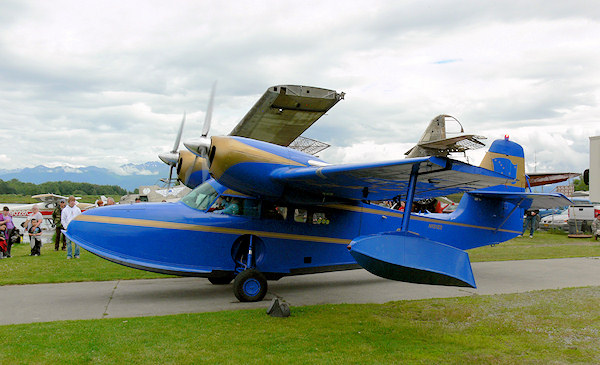
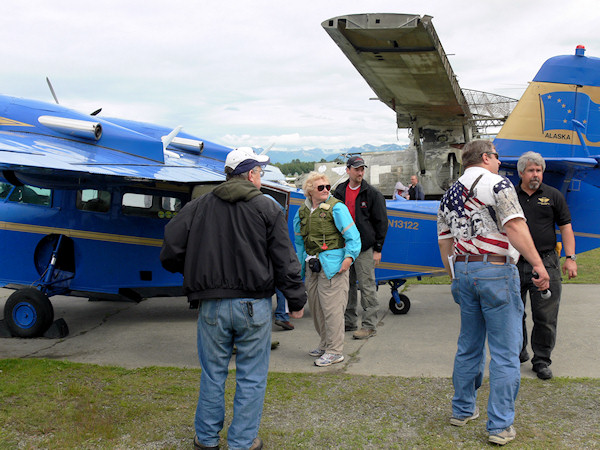
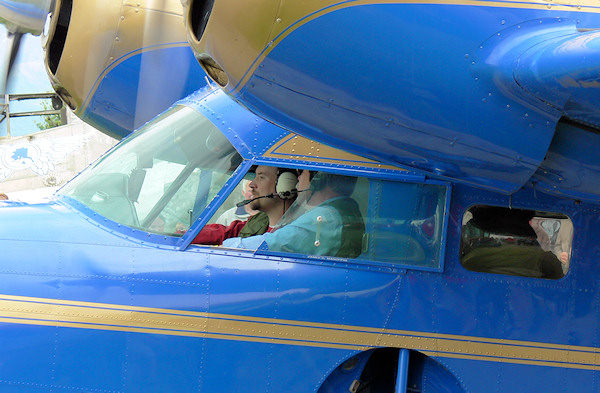
In July of 2010 Jack helped raise money for the Alaska Aviation Heritage Museum along with Lisa Kelly and Carey Hall.

It was a fun day, but this little guy was the cherry on top!

_______________________________________________

For a few more photos of old airplanes at the aviation museum click here.

_______________________________________________

Why are the Wheelbases of Alaskan Trucks so long?

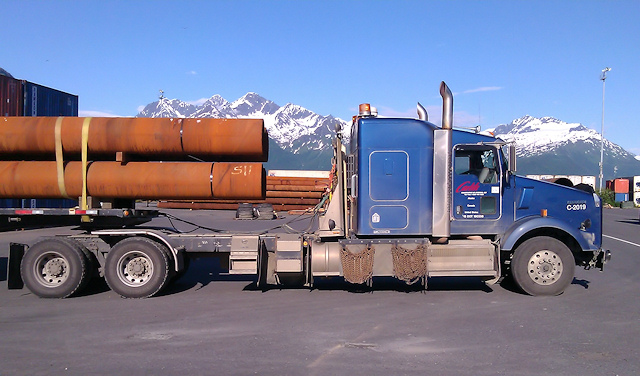
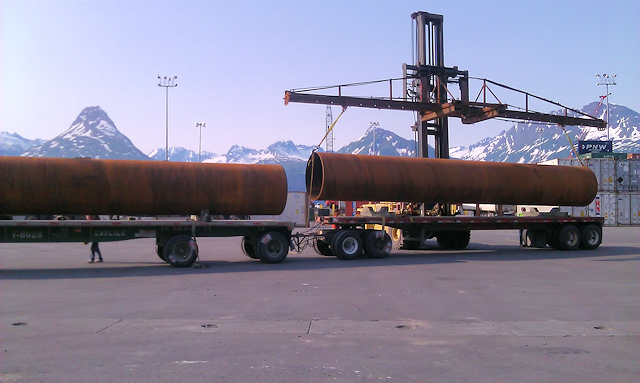
Someone asked a question on Facebook about why the wheelbases of big rigs in Alaska are so long.  Jack says they are so long in order to fit extra long loads.

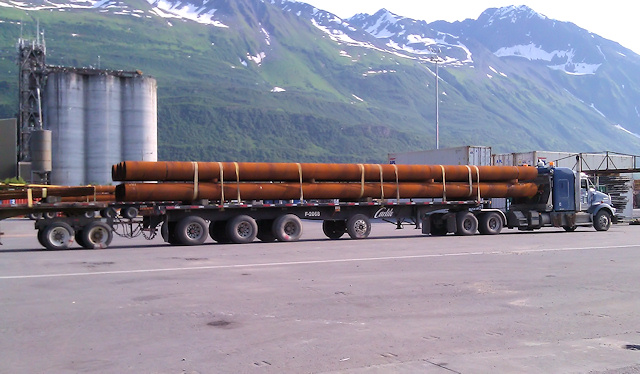
Here is a photo of the long wheelbase being utilized:

Down in the states, the wheelbase would be much shorter on most trucks.  In other words, the wheels would be much closer to the body of the truck and this sized pipe would result in more rear overhang, thus needing more permits and a more complicated set up.  So to avoid that, the wheelbase has been lengthened, since these kinds of loads are commonplace in Alaska.

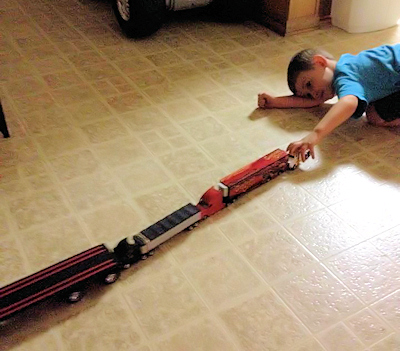
Since Jack has a long wheel base he can haul another trailer behind this one, as seen here:

This is the second trailer – it has a load of sheet pile (sheets of metal that are driven into the ground and used for road construction or for bridge construction).

(In the first photo you can see part of the second trailer but it’s hard to make out because there is another trailer of pipe behind it.  In the second photo I erased the pipe behind so you can see the load on the second trailer better.)

Here are a few more photos of the Salcha-Valdez pipe haul.

The last piece of pipe being loaded!

Jack is so happy to be on his LAST VALDEZ RUN so he can get back on the Dalton!!

___________________________

(Don’t forget, if you need the font size on this page larger for easier reading, press Ctrl +++ at the same time.)

___________________________
Still Hauling Pipe

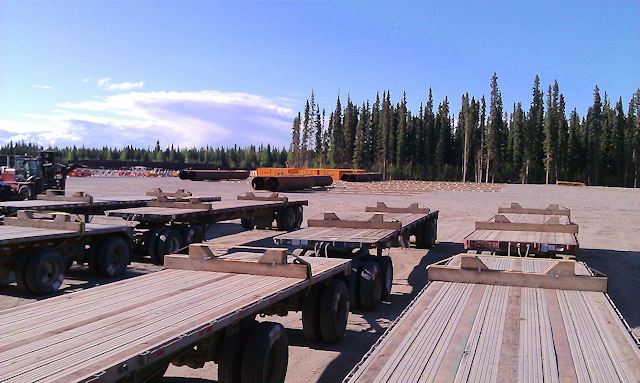
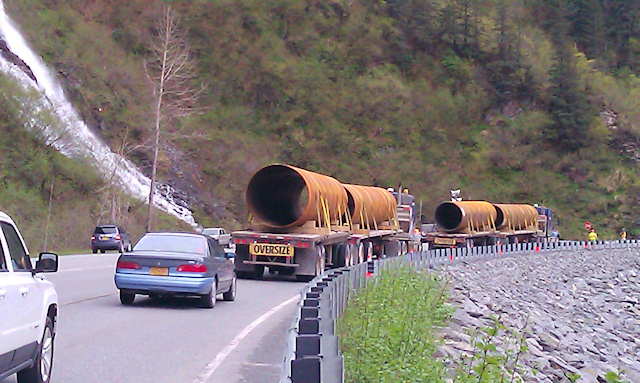
Here are some photos of the job Jack is presently working on, hauling huge pipe sections from the port of Valdez to Salcha where there is a railroad bridge being built across the Tanana River.

Empty trailers, waiting for the pipe.

This is a photo from an earlier post:  the trucks loaded with 2 lengths of pipe each, and more pipe in the background that still needed to be loaded and hauled to Salcha.  Each section is 6 feet in diameter and 43 feet long.  That stack has been transported by now but more has arrived from other barges.

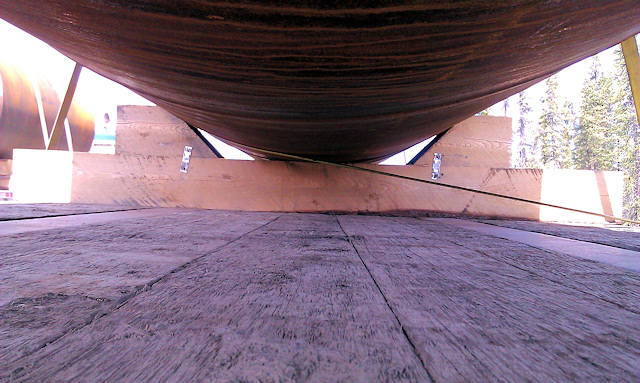
Eight inch wood dunnage cradling the pipe.  It gives space for the forks to pick it up and set it down, and the pipe chalks (upper wood pieces) stop it from rolling until they get it tied down.  Each piece of pipe is 25,000 pounds.

The trucks have to stop at quite a few roadwork sites along the Richardson Highway.  This is in the canyon just north of Valdez.

A couple of days ago Jack was held up at some roadwork for almost 2 hours.  Since the Richardson is one of only a couple of major highways in Alaska, there  must have been a line of ticked-off tourists 10 miles long!

Anyone interested in more information about this bridge project can go to this link:  State of Alaska webpage.